
Homes Designed For Modern Family Life
The modern British family home has a lot to cope with. It needs to provide somewhere to cook, eat, sleep, work, study, exercise, relax and entertain. It needs to handle children's toys, school bags, pets, laundry and the inevitable mountain of everyday possessions.
For many families, the answer isn't simply buying a bigger house. Instead, it is about making the existing space work harder. The most successful modern homes are designed around how people actually live – rather than how a traditional floor plan says they should live.
THE KITCHEN IS THE HEART OF EVERYTHING
The kitchen has become one of the hardest-working rooms in the house. Breakfast happens there. Homework happens there. Parents answer emails there. Children do crafts there. Friends gather there. That makes practical design particularly important.
Storage is essential. Deep drawers, tall cupboards and pantry space can help keep the kitchen organised, while an island or breakfast bar can provide a useful place to sit without requiring a separate dining room.
A well-designed kitchen with an efficient layout can be much more useful than a huge room filled with expensive appliances and furniture.
THE RISE OF THE BOOT ROOM
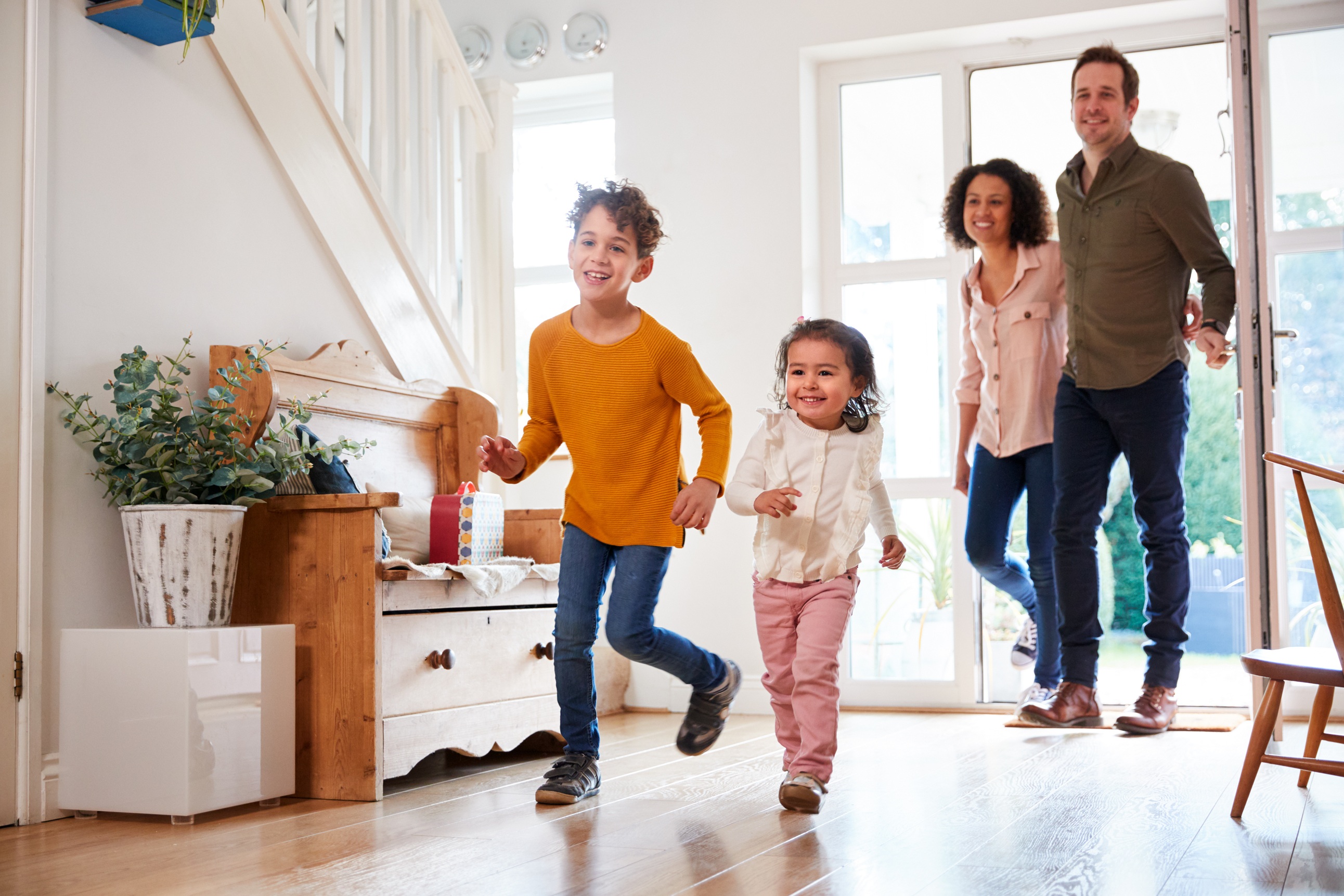
Another feature increasingly valued by families is the boot room. Once associated mainly with large country houses, boot rooms are now appearing in all kinds of family properties. Their appeal is simple: they contain the mess. Coats, muddy shoes, school bags, dog leads, umbrellas and sports equipment can all have a designated place. For busy households, that can make the difference between a calm entrance and a hallway that becomes permanently cluttered.
Even if there isn't space for a full boot room, built-in hallway storage can achieve a similar effect.
FLEXIBLE ROOMS ARE ESSENTIAL
Modern families don't necessarily need more rooms. They need rooms that can do more than one thing. A home office might be needed during the working week but could also function as a guest bedroom. A playroom could eventually become a teenager's study. A spare bedroom might double as a gym. This flexibility is particularly valuable as families change.
Children grow up. Working arrangements change. Hobbies come and go. A room that can evolve with those changes provides long-term value.
STORAGE IS THE SECRET WEAPON
Ask most families what they need more of and the answer is likely to be storage. There are coats, shoes, toys, books, bicycles, sports equipment, cleaning products, luggage and seasonal decorations to accommodate. Clever storage can make a home feel significantly larger without adding a single square metre.
Under-stairs cupboards, built-in wardrobes, window seats, utility rooms and fitted furniture can all help. The key is putting storage where it is actually needed. A cupboard near the front door is far more useful for school bags and shoes than one hidden upstairs.
THE UTILITY ROOM IS WORKING HARDER TOO
The utility room may not be the most glamorous space, but it can be one of the most useful. Laundry, cleaning supplies, pet equipment and household appliances can all be kept away from the kitchen and living areas.
For families with young children or dogs, a utility room close to an external door can be particularly useful. Even smaller properties can benefit from a dedicated laundry cupboard or compact utility zone.
MAKING THE GARDEN WORK HARDER
Outdoor space has also become an extension of the family home. A garden can provide somewhere for children to play, adults to entertain and everyone to escape. Creating separate areas can make a garden feel more useful. A patio close to the kitchen can become an outdoor dining space, while a lawn can be left open for children and pets. A quieter corner can provide somewhere for adults to sit and relax.
Garden rooms offer another option. They can become offices, gyms, studios, playrooms or hobby spaces.
DON'T FORGET QUIET SPACE
Family homes can be noisy. Parents may be working while children are watching television. One person might be exercising while another is trying to study. Creating somewhere quiet can therefore be surprisingly valuable.
It doesn't have to be a huge room. A small study, snug or reading corner can provide a place to escape.
Good internal doors, soft furnishings and thoughtful room layouts can also help reduce noise travelling around the house. Sometimes the greatest luxury in a busy family home is simply being able to close a door.
DESIGNING FOR THE FUTURE
A truly hard-working home should also be able to accommodate future changes. Children will grow. Parents may eventually need more privacy. Older relatives may visit or move in. Working patterns may change again. This makes adaptable design increasingly important.
A downstairs WC, accessible entrance and potential for ground-floor living can all make a home more future-proof. It doesn't mean designing a house around old age. It simply means considering how the property could work at different stages of life.
THE HOME THAT WORKS HARDEST
The best family home isn't necessarily the one with the largest footprint. It's the one where every part of the property has a purpose.
The kitchen handles cooking, homework and socialising. The hallway contains the clutter. The utility room deals with laundry. The garden becomes another living space. Spare rooms can change function as the family grows.
Ultimately, modern family life is unpredictable. The homes that succeed are those that can adapt to it. The biggest luxury isn't having more space. It's having a home that makes the space you already have work harder.
You might also be interested in

Sep 9, 2026
Is It Still Worth Buying a Fixer-Upper in 2026?
There has always been something appealing about a fixer-upper. For some buyers, it represents an opportunity to purchase a property in a desirable location for less than the cost of a fully renovated

Aug 26, 2026
SMALL HOMES, BIGGER LIFESTYLES
For decades, bigger homes were seen as the ultimate symbol of success. More bedrooms, larger kitchens and expansive gardens were often considered the natural progression for growing families and ambit